I was staring at a pile of returns in my studio last Tuesday—mostly heavy-duty blanks that looked incredible in high-res studio shots but felt like cheap, paper-thin polyester the second they hit the light. It’s the same trap everyone falls into: you see a model looking effortless in a heavy drop-shoulder tee, you click buy, and then you realize you’ve been played by a glorified filter. Buying online without trying shouldn’t feel like a high-stakes gamble where the house always wins, but most brands are banking on you not knowing the difference between a premium knit and a fast-fashion scrap.
I’m not here to give you a list of “must-have” trends or tell you which influencer is wearing what. Instead, I want to give you the actual technical toolkit you need to vet a garment through a screen. We’re going to talk about decoding GSM, spotting dodgy seam finishes in zoomed-in photos, and understanding how a fabric’s weight actually dictates its drape. I’ll show you how to stop chasing the aesthetic and start investing in construction that actually lasts.
Mastering How to Measure Yourself for Online Shopping
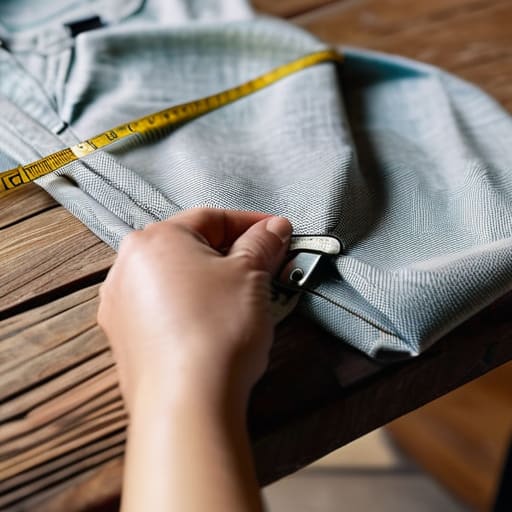
Look, I’ve spent way too many hours hunched over a cutting table to tell you that a “Medium” means anything universal. Brands are all over the place; one person’s slim-fit tee is another person’s oversized boxy crop. If you want to stop the cycle of clothing fit uncertainty, you have to stop relying on your usual size and start looking at the actual numbers. Grab a soft measuring tape—not a metal construction one, please—and get your real dimensions. I’m talking chest, shoulder width, and most importantly, your sleeve length.
When you’re looking at accurate sizing charts, don’t just compare your body measurements to the garment’s measurements. You need to check the “ease.” If a shirt is 20 inches across the chest and you are also 20 inches, you aren’t going to be able to breathe, let alone move. I always recommend measuring your favorite, most comfortable existing shirt instead of your actual body. It’s the most effective way of minimizing online shopping mistakes because you’re comparing a physical reality you already love to the digital specs on the screen.
Why Accurate Sizing Charts Are Your Only Real Protection
Look, I’ve spent way too many late nights in the studio staring at a pile of returns because a “Large” from one brand fit like a Medium from another. This is where the clothing fit uncertainty really starts to bite. Most brands want you to just click “add to cart” and hope for the best, but hope isn’t a manufacturing standard. If a brand doesn’t provide accurate sizing charts with specific garment measurements—not just “body measurements,” but the actual width of the chest or the length of the sleeve—that’s a massive red flag. They’re essentially asking you to gamble with your money.
Even with all the hype around virtual try-on technology, we aren’t quite at the point where a digital avatar can tell you exactly how a heavy 300 GSM French terry is going to drape over your shoulders. Until that tech actually works, the chart is your only shield. I always tell people: if the measurements aren’t there, don’t trust the “fit model” photos. Those models are often wearing samples specifically tailored to their exact proportions, which is a total lie to anyone shopping from a screen.
The Real Stuff: 5 Ways to Stop Guessing and Start Knowing

- Stop looking at the model and start looking at the GSM. If a brand doesn’t list the weight of the fabric, they’re likely hiding a thin, flimsy blank that’ll lose its shape after two washes. A heavy, high-GSM cotton hangs differently and lasts way longer than that sheer stuff you see in fast-fashion ads.
- Hunt for the seam construction in the photos. I always flip a garment inside out to see the real story. If the photos don’t show the interior, look for mentions of “overlock” or “flatlock” stitching. If it’s just raw edges or cheap serging, that piece isn’t going to survive a heavy rotation.
- Read the fiber content, not the marketing buzzwords. “Luxury blend” is a red flag for “we added cheap polyester to save money.” If you want something that actually breathes and holds its structure, look for 100% organic cotton or specific weight percentages of natural fibers.
- Check the “Garment Measurements” vs. “Body Measurements.” A brand might say a shirt is a “Large,” but if the actual chest width measurement is tiny, it’s not going to fit like a standard Large. Always look for the flat-lay measurements so you can compare them to the shirts you already love.
- Scrutinize the “Wash and Care” instructions before you hit buy. If a piece requires a specialized, high-maintenance cleaning routine just to keep it from shrinking into a doll’s shirt, it’s probably poorly stabilized. Good construction should be able to handle a standard, gentle cycle without falling apart.
The Cheat Sheet for Not Wasting Your Money
Stop guessing your size based on “Small” or “Large”—grab a measuring tape, find a garment you already love that fits perfectly, and compare those actual numbers to the brand’s specific chart.
Look past the lifestyle photography and hunt for the technical specs; if a brand won’t tell you the GSM or the fabric composition in the description, they’re probably hiding a flimsy construction.
Always check the seam construction and hem details in the close-up shots; a high-quality blank should have clean, intentional finishing, not loose threads that suggest it’ll fall apart after two washes.
Frequently Asked Questions
If the size chart says it's a medium but the fabric has zero stretch, should I actually size up to avoid it feeling like a cardboard box?
Short answer? Absolutely. If that fabric has zero give—like a heavy, non-stretch canvas or a stiff woven cotton—you aren’t just buying a size; you’re buying a fixed shape. A “medium” on a chart is just a mathematical snapshot, but it doesn’t account for how the garment moves with your ribs when you actually breathe. If the GSM is high and the stretch is zero, size up. Trust me, nobody wants to feel like they’re wearing a cardboard box.
How can I tell if a brand is just using "oversized" as a marketing buzzword for poor pattern cutting instead of an actual intentional fit?
Look at the shoulder seams and the drape. An intentional oversized fit has a deliberate silhouette—think dropped shoulders that actually follow the arm’s line and enough weight in the fabric to hold its shape. If the garment just looks “big” because the proportions are wonky, or if the neck hole is stretched out and the hem is uneven, they haven’t designed a fit; they’ve just scaled up a basic pattern to charge you a premium.
Is there any way to gauge the actual weight or thickness of a garment through a screen if they don't explicitly list the GSM?
It’s a total guessing game when they leave the GSM off, but you can play detective. First, look at the way the fabric drapes in the photos—if it looks stiff and holds its shape, it’s likely a heavier weight. If it clings or looks “liquidy,” it’s probably a thin, lightweight jersey. Also, check the product description for words like “heavyweight,” “structured,” or “compact cotton.” If they don’t mention those, proceed with caution.