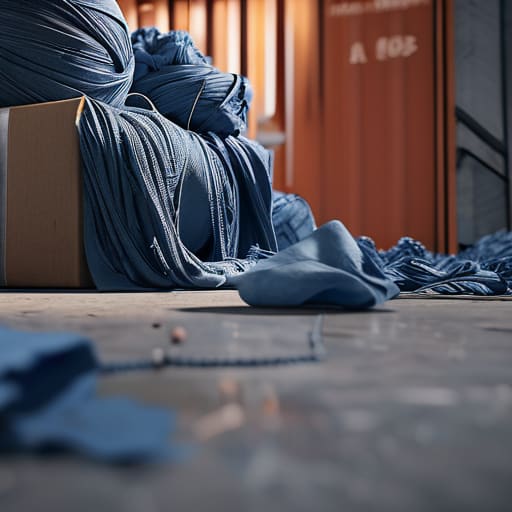
I was sitting on the floor of my studio last Tuesday, surrounded by a mountain of polybags that smelled faintly of industrial dye and regret, staring at a stack of shipping labels. I’d just spent three hours processing a batch of “customer dissatisfaction” from a small drop I’d run, and it hit me how much everyone glosses over the actual math of returns and their cost. Most brands try to hide this behind slick marketing or “customer-first” slogans, but let’s be real: every time a garment comes back, it’s a slow bleed on your margins. It isn’t just the postage; it’s the wasted fabric, the broken packaging, and the sheer mental drain of re-sorting inventory that should have been out in the world in the first place.
I’m not here to give you some polished corporate lecture on logistics optimization. Instead, I want to pull back the curtain on the actual wreckage a high return rate leaves on a small production cycle. We’re going to talk about the real numbers—from the shipping fees that eat your profit to the way poor pattern cutting can trigger a wave of returns you can’t afford. I’ll show you how to spot the red flags in your production so you can stop paying for mistakes you didn’t even know you were making.
The Invisible Drain the True Cost of Processing Returned Goods

The Invisible Drain: The True Cost of Processing Returned Goods
Most people think a return is just a lost sale, but it’s actually a massive logistical headache that bleeds your bank account dry. When a customer sends a garment back, you aren’t just losing the initial revenue; you’re suddenly stuck dealing with the messy reality of reverse logistics management. Someone has to open the package, inspect the fabric for stains or snags, re-fold it, and decide if it’s even fit to go back on the rack. If it’s a high-GSM heavy cotton tee that’s been shoved into a tiny poly mailer for three days, it might arrive looking like a crumpled mess, requiring extra steaming or, worse, being written off as deadstock entirely.
This is where the real impact of returns on profitability hits home. You’re paying for the outbound shipping, the inbound return, the labor for the inspection, and the storage space for items that aren’t actually selling. It’s a cycle of wasted energy and wasted money that eats into the margins you worked so hard to build when you were sourcing those premium blanks.
Beyond the Label How Reverse Logistics Management Erodes Profitability

It’s not just about the postage. When we talk about reverse logistics management, most people think of a box arriving at a warehouse, but they forget about the human hands required to touch it. Someone has to open it, inspect the stitching for snags, check if the GSM still feels right, and decide if it’s even fit for resale. If a customer returns a heavy-weight hoodie because the fit was slightly off, that garment is now sitting in a limbo state—it’s not inventory, and it’s not profit. It’s just dead weight taking up space in a studio or a warehouse.
This is where the real impact of returns on profitability hits the hardest. You aren’t just losing the sale; you’re losing the labor, the packaging, and the mental bandwidth. I’ve seen small brands go under because they focused so much on the “drop” that they ignored the math behind the back-end. If you aren’t obsessing over product sizing accuracy and returns, you’re basically just subsidizing your customers’ wardrobes at your own expense. It’s a massive, invisible leak in the bucket.
How to stop your profit from bleeding out through the returns portal
- Fix your sizing charts before you ship anything. I’ve spent way too many hours looking at garments that were clearly mislabeled, and honestly, if your size guide is just a vague suggestion, you’re basically just inviting people to send stuff back.
- Quality control isn’t just for the outgoing pile. When a return hits your studio, inspect it like it’s your own piece. If you’re just tossing it back into inventory without checking the seams or the wash, you’re going to end up selling a defect to someone else and killing your reputation.
- Stop the “return for everything” culture by being hyper-specific in your descriptions. Don’t just say it’s “oversized”—tell them the actual drop shoulder measurement. If I know exactly how a heavy GSM fleece is going to sit on my frame, I’m a lot less likely to send it back.
- Look at the data, not just the dopamine. If one specific print or one specific cut is getting returned at a higher rate, stop blaming the customers and start looking at the construction. There’s usually a pattern, and it’s usually a flaw in how the garment was actually made.
- Make your return policy a conversation, not a legal document. If you make it a nightmare to return something, people won’t complain, but they also won’t ever buy from you again. Be clear about who pays for shipping, but keep it human—people respect transparency more than a wall of fine print.
The Bottom Line: What You’re Actually Losing
It isn’t just the price of the garment; it’s the labor of the person who has to inspect it, the shipping that eats your margin, and the fact that a returned shirt often can’t be sold as “new” again.
A high return rate is a massive red flag for your production quality—if people are sending things back because the fit is off or the seams are wonky, you aren’t just losing a sale, you’re burning cash on bad manufacturing.
Stop looking at returns as a “customer service” issue and start seeing them as a logistics leak that can drain your entire profit margin if you don’t tighten up your sizing charts and quality control.
Frequently Asked Questions
If I'm trying to scale my small production run, at what point does a high return rate actually start killing my ability to reinvest in better fabrics?
Honestly? It’s a tipping point. If your return rate creeps past 10-15%, you aren’t just losing the sale; you’re losing the ability to buy that heavy-weight French terry you actually wanted. Every returned box is cash tied up in shipping, restocking, and inspecting damaged seams instead of being sitting in your fabric bank. Once you’re spending more on logistics than on your next roll of organic cotton, you’re essentially subsidizing your own decline.
Is there a way to tell if a customer is returning something because of a genuine construction flaw versus just "buyer's remorse" before I pay for the shipping?
Honestly, there’s no magic wand, but I always look at the “why” behind the return. If they’re sending back a heavy-weight hoodie because the side seams are twisting or the hem is puckering, that’s a construction fail—my fault, or the factory’s. But if they’re just “not feeling the fit,” that’s buyer’s remorse. I try to check their order history; if they’re a serial returner, it’s usually remorse. If it’s a one-off, it’s probably a flaw.
How much of my profit margin is actually being swallowed up by the labor of inspecting and re-folding items just to get them back on the shelf?
Honestly? A massive chunk. You aren’t just losing the shipping fee; you’re paying for the minutes someone spends squinting at a seam to check for pulls, or wrestling a wrinkled hoodie back into a perfect fold. It’s pure labor—unseen, unbilled, and incredibly draining. If you’re doing this ten times a day, you’re basically running a small, unpaid cleaning service for your own inventory instead of actually growing your brand.