
I was hunched over my cutting table last Tuesday, surrounded by scraps of heavy-weight jersey, when I realized I’d just wasted three yards of premium French terry because I trusted a “standard” chart. It’s the same old story: you see a size Medium from a Japanese streetwear brand, you click buy, and suddenly you’re wearing something that looks like it was tailored for a toddler. Most brands treat international size conversion like a suggestion rather than a science, hiding behind vague labels that leave you guessing. It’s honestly exhausting how much we rely on these broken translation layers instead of actual, honest-to-god measurements.
I’m not here to give you a glossy, marketing-approved PDF that ignores the reality of how different cultures cut their clothes. My goal is to strip away the confusion and give you the actual math you need to navigate these shifts without ending up with a garment that fits like a tent. We’re going to look past the labels and talk about real body dimensions, because I’d much rather you understand a shoulder width measurement than trust a generic “Large” from halfway across the world.
Why Eu Clothing Sizing Standards Will Break Your Margins
If you’re running a small brand or even just trying to source specific blanks for a capsule drop, you’ll quickly realize that EU clothing sizing standards are a complete minefield. It’s not just about a number being slightly off; it’s about how the entire construction logic changes once you cross borders. In the US, we’re used to a certain way of grading patterns, but European manufacturers often follow much tighter, more structured silhouettes. If you’re looking at a standard women’s apparel size guide and trying to map it to your usual US stock, you might think you’re safe, only to find your entire shipment fits like a second skin rather than the relaxed, oversized aesthetic you were aiming for.
This is where your margins go to die. When you’re dealing with the headache of metric vs imperial measurements alongside inconsistent grading, your return rates will skyrocket. You can spend all day staring at a clothing size conversion chart, but no spreadsheet can account for a factory in Italy cutting a “Medium” differently than a workshop in Portugal. One wrong assumption about how a size is scaled, and suddenly you’re paying for shipping on a mountain of deadstock that nobody can actually wear.
Metric vs Imperial Measurements the Math Behind the Fit
Here’s where the real headache starts. If you’re looking at a spec sheet and seeing a mix of inches and centimeters, don’t just eyeball it. The jump between metric vs imperial measurements isn’t just a math problem; it’s a physical reality that dictates whether a garment drapes or just hangs there like a heavy curtain. When I’m grading patterns, I can’t just “roughly” convert a 20-inch chest to 50 centimeters and call it a day. That tiny discrepancy might not seem like much on a screen, but once you’ve cut the fabric, there is no going back.
Most people treat a clothing size conversion chart like it’s some kind of universal truth, but it’s often just a best guess. A “Medium” in a US-based brand might be built on imperial logic that feels totally different once you hit a workshop using metric grading. If you aren’t measuring the actual garment—not just the person, but the actual piece of cloth—you’re basically gambling with your budget. You have to respect the numbers, or you’ll end up with a pile of expensive, unwearable scrap.
5 Ways to Stop Getting Ghosted by Your Own Measurements
- Stop trusting the letters. A “Large” in a Tokyo streetwear brand is a completely different beast than a “Large” from a US heritage label. If you aren’t looking at the actual centimeter or inch measurements, you’re just gambling with your money.
- Always check the “garment measurements” versus “body measurements.” Some brands list what fits your body, while others list the actual dimensions of the fabric. If you confuse the two, you’re either going to be swimming in cotton or unable to breathe.
- Learn the “shoulder-to-shoulder” trick. Since I spend half my life looking at the inside of seams, I can tell you that the shoulder width is the most honest measurement on a spec sheet. If the shoulders don’t line up, the rest of the sizing math usually falls apart.
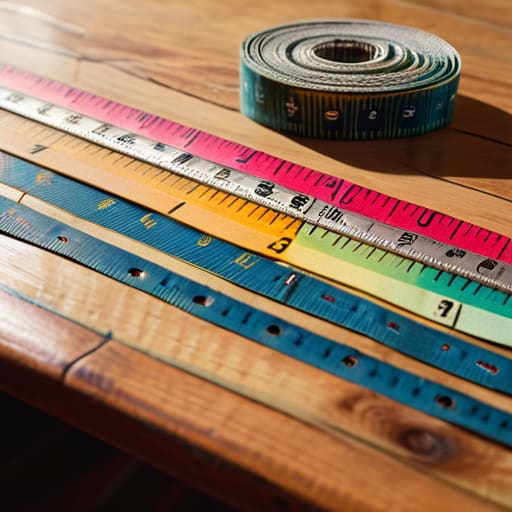
- Get a soft measuring tape and actually use it on your favorite, most-loved shirt. Don’t guess based on how you feel today; measure the piece that actually fits perfectly and use those numbers as your baseline for every single international order.
- Watch out for the “vanity sizing” trap. A lot of Western brands inflate their numbers to make us feel better, but when you try to convert those to strict European or Asian metric standards, the math suddenly stops making sense. Always prioritize the raw numbers over the label.
The TL;DR on Not Getting Scammed by Sizing
Stop trusting the letter on the tag; a “Large” in a Tokyo streetwear brand and a “Large” in a US heritage label are two completely different animals, so always default to the actual centimeter measurements.
If you’re ordering across borders, do the math yourself—converting inches to centimeters on the fly is a recipe for a garment that fits like a tent or a second skin.
Always factor in fabric shrinkage and seam allowances before you commit, because a perfect measurement on a dry screen can turn into a disaster after the first wash.
Frequently Asked Questions
If I'm buying a heavyweight blank from a US supplier but I'm based in Europe, should I be looking at the actual centimeter measurements or just trusting the 'Large' label?
If you’re buying a heavyweight blank from the US, do not—I repeat, do not—trust that “Large” label. A US Large is a completely different beast than an EU Large, especially with heavy fabrics that don’t drape or stretch easily. If you just go by the tag, you’re going to end up with a garment that fits like a literal box. Grab the spec sheet and check the actual centimeter measurements for the chest and length. Trust the math, not the label.
Is there a way to tell if a brand is actually following standard sizing or if they're just slapping "oversized" on a tiny garment to justify a weird fit?
Look, if a brand calls something “oversized” but the shoulder seams are still sitting right on your collarbone, they’re lying to you. It’s a cheap way to hide inconsistent grading. Always ignore the marketing buzzwords and hunt for the actual measurement chart. Check the chest width and the sleeve length specifically. If they aren’t providing those numbers in centimeters or inches, they’re probably just slapping a trendy label on a standard, poorly cut garment.
How much does the fabric composition—like a 100% cotton jersey versus a blend—actually change how much I should account for when converting sizes?
This is where most people trip up. If you’re converting sizes for a 100% cotton jersey, you have to account for shrinkage—it’s going to pull in, especially after the first wash. But if you’re dealing with a poly-blend, that fabric is going to hold its shape much more stubbornly. Don’t treat them the same. A “Medium” in a rigid blend might fit totally different than a “Medium” in a high-shrinkage natural fiber.