I was hunched over my cutting table last Tuesday, surrounded by half-finished heavy cotton sweats, when I realized I’d just wasted three yards of premium French Terry because the “size large” waistband didn’t match the spec sheet by a full two inches. It’s infuriating. Most brands treat waist sizing inconsistency like some unavoidable quirk of fashion, but let’s be real: it’s usually just a symptom of lazy pattern grading or cutting corners on quality control to save a few cents per unit. If you’re buying a garment based on a number in a dropdown menu without looking at the actual construction, you’re essentially gambling with your money.
I’m not here to give you a lecture on “seasonal trends” or tell you which designer is currently “in.” Instead, I want to pull back the curtain on why your measurements never seem to line up and how you can spot a badly engineered garment before you even hit the checkout button. We’re going to talk about spec deviations, fabric shrinkage, and why a brand’s “vanity sizing” is often just a mask for poor manufacturing. Consider this your no-nonsense guide to actually understanding how clothes are built.
Vanity Sizing Explained Why Your Label Is Lying
Let’s be real: that “32” on your waistband? It’s probably not a 32. Most of the time, it’s a lie. This is vanity sizing explained in its purest, most annoying form. Brands realized years ago that if they label a 36-inch waist as a 34, customers feel better about themselves, which keeps them clicking “add to cart.” It’s a psychological trick that has completely muddied the waters of standardized sizing vs retail sizing. Instead of following a strict measurement, brands are basically playing a game of “how much extra fabric can we hide in this seam to make the customer feel slim?”
The problem is that this isn’t just about ego; it’s about a total lack of technical discipline. When you start seeing massive clothing brand size discrepancies between a vintage find and a modern mall brand, you’re seeing the fallout of this trend. You can’t just rely on the number on the tag anymore. If you want to actually know if a piece will fit your frame, you have to stop trusting the label and start understanding garment measurements through actual inches and centimeters.
Standardized Sizing vs Retail Sizing the Spec Gap
Here’s the thing: there is a massive, frustrating canyon between what a technical spec sheet says and what actually ends up on a retail hanger. When I’m working on a production run, I’m looking at a tech pack that dictates exact millimeter-perfect measurements. That’s standardized sizing vs retail sizing in a nutshell. In a controlled factory setting, a size 32 should be a size 32. But once those garments hit the cutting room floor and move into the hands of mass-market distributors, the “spec gap” begins to widen.
This is where you see those wild clothing brand size discrepancies that make shopping online feel like a gamble. A brand might take a standardized pattern but then “grade” the sizes loosely to make the garment feel more comfortable—or more importantly, to make you feel better about buying it. They aren’t following the math anymore; they’re following a vibe. If you aren’t actually looking at the garment measurements provided in a size chart, you’re basically just guessing which version of “Medium” you’re going to receive.
How to Actually Measure Your Clothes (Without Losing Your Mind)
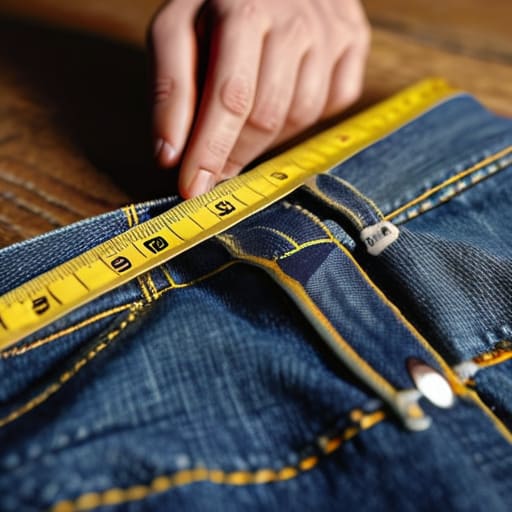
- Stop trusting the number on the tag and start using a soft measuring tape. If you’re buying online, I need you to measure your favorite pair of trousers from side seam to side seam while they’re laying flat on the floor, then double that number. That’s your real baseline, not whatever “32” the brand says it is.
- Check the fabric composition before you even look at the cut. A 100% cotton heavy-weight denim isn’t going to budge, but if there’s 2% elastane in there, that waist measurement is going to stretch out after two hours of sitting down. You have to account for that “give” or you’ll be swimming in them by lunchtime.
- Look for the “rise” measurement in the spec sheet. A lot of people get frustrated because a waist fits but the pants feel like they’re falling off; usually, it’s because the rise is too long or too short for your torso. If the rise is off, the waist placement is going to feel totally wrong no matter what the circumference says.
- Pay attention to the waistband construction. If it’s a simple single-stitch construction, it’s going to lose its shape fast. I always look for a reinforced waistband or a bit of interlining—it keeps the tension even so the waist doesn’t turn into a wavy mess after three washes.
- Always ask for the “tolerance” if you’re dealing with smaller, independent labels. In manufacturing, there’s always a tiny bit of wiggle room, but if a brand has a high tolerance (like +/- 2cm), it means their quality control is basically non-existent and you’re gambling every time you hit ‘order.’
The Real Cost of a "Perfect Fit"
Stop trusting the number on the tag; a size 32 in one brand is a size 34 in another, so always hunt for the actual garment measurements or the spec sheet before you buy.
Vanity sizing isn’t just a quirk—it’s a way for brands to mask poor pattern cutting and inconsistent grading, often leaving you with clothes that look great on a hanger but fall apart at the seams after three washes.
If you want clothes that actually last, look past the “fit” and check the construction; consistent sizing is usually a byproduct of disciplined manufacturing, whereas erratic measurements are a red flag for cheap, rushed production.
Frequently Asked Questions
If I'm buying vintage or secondhand, how can I tell if the sizing is actually consistent with the era or just a result of fabric shrinkage over time?
Honestly, it’s a bit of a guessing game, but there are tells. First, check the grainline and the seams. If the garment looks warped or the side seams are twisting toward the front, that’s structural shrinkage—the fabric literally lost its shape. If the weave looks tight and the seams are straight but it’s just small, it’s likely just the era’s cut. Always feel the weight; a heavy, dense cotton holds its shape better than a flimsy, shrunken one.
Does the weight of the fabric, like a heavy 14oz denim versus a lightweight twill, actually change how the waist measurement holds up after a few washes?
It’s all about structural integrity. A lightweight twill is basically a suggestion; it has less “memory,” so once those fibers relax after a few washes, the waist tends to sag or lose its shape entirely. But that 14oz denim? It’s a beast. The sheer density of the weave means it fights to stay where it was cut. It might feel stiff at first, but it holds the line much better than flimsy stuff.
Is there any way to spot a garment with poor pattern cutting before I buy it, or am I just stuck trusting the spec sheet?
Look, don’t just trust the spec sheet; they’re often written by someone who’s never actually held the garment. If you can, turn it inside out—that’s my first move. Check the seam allowances. If they’re paper-thin or uneven, the pattern cutting was rushed, and that piece is going to warp after one wash. Also, look at the grainline. If the fabric looks like it’s twisting slightly even when it’s flat, the pattern was misaligned. That’s a disaster waiting to happen.