
I still remember sitting on the floor of my first shared studio, surrounded by half-empty ink cans and a mountain of rejected samples, staring at a spreadsheet that made absolutely no sense. I had spent weeks obsessing over the perfect vintage-wash feel, only to realize I was essentially subsidizing my customers’ wardrobes because I hadn’t accounted for the actual cost of my time or the premium GSM of my blanks. Everyone in the industry wants to talk about “brand positioning” and “perceived value,” but if you aren’t pricing a garment properly from the jump, you aren’t building a brand—you’re just running an expensive hobby.
I’m not here to give you a lecture on luxury marketing or how to trick people into paying more for a logo. Instead, I want to pull back the curtain on the actual math that keeps a small-run producer from going broke. We’re going to strip away the hype and look at the raw numbers, from the literal cents lost on seam allowance to the hidden costs of sourcing quality textiles. By the end of this, you’ll know exactly how to value your craft so that you actually stay in business.
Why an Apparel Manufacturing Cost Breakdown Matters More Than Hype

Look, I get it. It’s easy to get swept up in the “aesthetic” of launching a brand. You see a viral TikTok of a heavy-weight hoodie, you see the engagement numbers, and you think, “Yeah, I can sell this for eighty bucks.” But hype is a terrible foundation for a business. If you’re building your entire brand identity on a trend without actually sitting down with a spreadsheet, you aren’t a designer; you’re just a gambler.
A real apparel manufacturing cost breakdown is what keeps you from waking up six months in with a warehouse full of inventory and zero cash in the bank. I’ve seen so many creators skip the boring stuff—like the actual cost of the dye, the shipping surcharges, or even the tiny bit of extra fabric lost to seam allowances—because they were too busy obsessing over the logo. When you ignore these granular details, your production cost vs retail price ratio gets completely skewed. You might think you’re making a killing, but once you factor in actual overhead, you’re likely just subsidizing your customers’ wardrobes.
Calculating Garment Profit Margins Without Sacrificing Quality
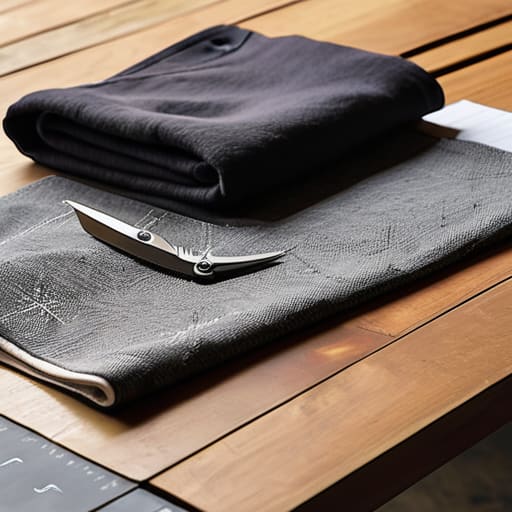
Here’s the thing: I see so many people launch a brand, pick a “cool” price point based on what their favorite influencer charges, and then wonder why they’re perpetually broke. You can’t just eyeball your way through calculating garment profit margins. If you’re trying to build something that actually lasts, your math has to be as precise as your pattern cutting. You need to look at the cold, hard reality of your production cost vs retail price. If you’re using a heavy, premium 300 GSM organic cotton blank but pricing your hoodies like they’re fast-fashion scraps, you aren’t building a business; you’re running a charity for your customers.
A solid clothing retail markup strategy isn’t about being greedy; it’s about creating a buffer for the inevitable chaos of production. Between shipping delays, fabric wastage, and the occasional misprint, things will go wrong. If your margins are razor-thin because you were too scared to price in the actual value of your craft, one bad batch of blanks will sink your entire season. You have to price for the quality you actually intend to deliver, not the version of yourself that’s hoping for a miracle.
The Real Math: 5 Things Your Spreadsheet is Probably Missing

- Stop treating your blanks like a fixed cost. If you’re jumping from a 180 GSM to a 240 GSM cotton to get that heavy streetwear feel, your price point needs to shift immediately. You can’t charge premium prices for a lightweight feel just because the “vibe” is right.
- Account for the “oops” factor. I’ve spent more afternoons than I’d like to admit fixing misprints or re-cutting a pattern because a sample went sideways. If you aren’t adding a small percentage buffer for wastage and mistakes, those errors are coming directly out of your own pocket.
- Don’t sleep on the small stuff. It’s easy to obsess over the fabric cost and forget that custom neck labels, hangtags, and even the polybags add up. Those extra cents per unit might seem tiny, but they’re the difference between a sustainable business and a hobby that’s bleeding you dry.
- Factor in your actual labor, not just “ideal” hours. If it takes you three hours to hand-screen a print because you want the ink to sit perfectly, you have to price for those three hours. Don’t devalue your craft by pretending the technical work happens for free.
- Look past the wholesale number. When you’re setting your MSRP, don’t just double your cost and call it a day. You need to account for the shipping logistics and the platform fees that eat your margins before you even see a cent of profit.
The Bottom Line: What Actually Matters
Stop treating your blanks like an afterthought; if you don’t factor the real cost of a heavy GSM fabric into your initial math, your “profit” is going to vanish the second you try to scale.
Quality isn’t a luxury, it’s a line item—account for every cent spent on proper seam allowances and construction details now, or you’ll end up paying for it later in returns and bad reviews.
Build your margins around the craft, not the trend; pricing based on actual production costs ensures you’re actually running a business instead of just subsidizing your customers’ wardrobes.
Frequently Asked Questions
If I switch to a higher GSM fabric to improve the drape, how much do I actually need to bump my retail price to stay profitable?
Don’t just tack on an extra five bucks and hope for the best. If you’re jumping from a 180 GSM to a 300 GSM loopback fleece, you aren’t just paying for more cotton; you’re paying for the weight in shipping and the different tension settings on your machines. I usually recommend a 2.5x to 3x markup on the new total landed cost. If the drape is better, sell the feeling, not just the fabric.
How do I factor in the "hidden" costs like thread tension issues or wasted fabric scraps when I'm trying to set my base production cost?
You can’t just budget for the yardage in the pattern; you have to budget for the mess. I always add a “buffer percentage”—usually 5% to 10%—to my fabric costs to cover those inevitable cutting errors or weirdly shaped scraps that end up in the bin. And don’t forget the “machine tax.” If a tension issue ruins a sleeve, that’s lost time and thread. Account for the friction, or it’ll eat your margins alive.
Is it better to bake my marketing budget into the unit price of every shirt, or should I keep my manufacturing costs separate from my brand spend?
Don’t bake your marketing spend into your unit cost. If you do that, you’re lying to yourself about what it actually costs to make a shirt. I’ve seen too many people think their “product cost” is $25, only to realize they’re actually losing money because they didn’t account for the ad spend required to move it. Keep your manufacturing costs—the GSM, the thread, the labor—totally separate from your brand spend. You need to know exactly what the craft costs before you start paying for the hype.